Ask someone outside Japan to name a Japanese streaming service and you’ll hear “Netflix Japan… Crunchyroll?” — which is funny, because neither is what people in Japan actually open after dinner. Japan has its own ecosystem of streaming services, several of them completely free, most of them barely known overseas, and almost all of them geo-blocked.
I live in Japan, so this is the insider’s map: what each service is, what it’s for, and what it takes to watch from abroad.
The Quick Map
| Service | What it is | Free? | Known overseas? |
|---|---|---|---|
| TVer | Official catch-up TV for all major networks | ✅ Free | Almost unknown |
| ABEMA | 24/7 channels + anime, shogi, reality shows | ✅ Mostly free | Barely |
| NHK ONE / NHK World | Public broadcaster streaming | ✅ Free* | NHK World only |
| U-NEXT | Japan’s biggest paid VOD library | Paid | Unknown |
| FOD / Lemino / DMM TV | Mid-size VOD with exclusives | Paid | Unknown |
| niconico | The legendary comment-overlay video site | ✅ Free tier | Cult-famous |
| radiko | Every Japanese radio station, live | ✅ Free tier | Unknown |
Almost everything above checks your IP address and shows a polite error if you’re outside Japan. We’ll get to that at the end.
TVer — The One That Surprises Everyone
If you only learn about one service from this page, make it TVer. It’s the official, completely free catch-up platform run jointly by Japan’s commercial TV networks. Almost every prime-time drama, variety show, and anime that airs on Japanese TV appears on TVer for at least a week after broadcast — legally, in HD, no account required.
For anyone learning Japanese or following J-drama, this is the single best resource that nobody outside Japan has heard of.
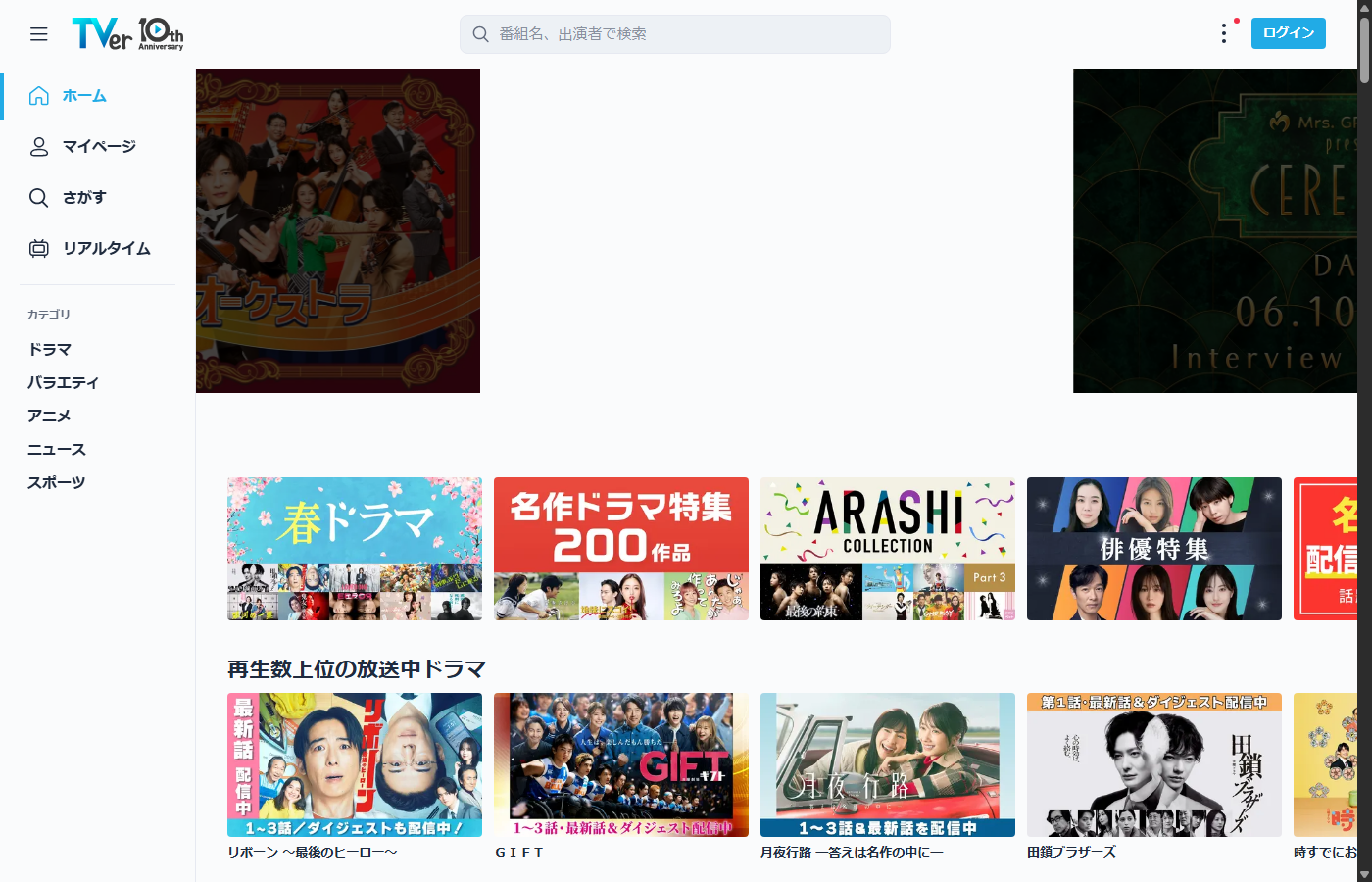 TVer’s homepage, captured from here in Japan (June 2026). Source: tver.jp
Catch: strict geo-blocking, and content rotates out after 1–2 weeks. → Full guide: How to Watch TVer Outside Japan
ABEMA — Internet TV That Took Over
ABEMA runs like television — 24/7 scheduled channels for anime, news, fighting games, mahjong, and shogi — plus an on-demand library. It’s free with ads; a premium tier unlocks back-catalogs.
Why foreigners care: same-day anime simulcasts, exclusive reality shows, and one-of-a-kind content like professional shogi coverage that exists nowhere else on Earth.
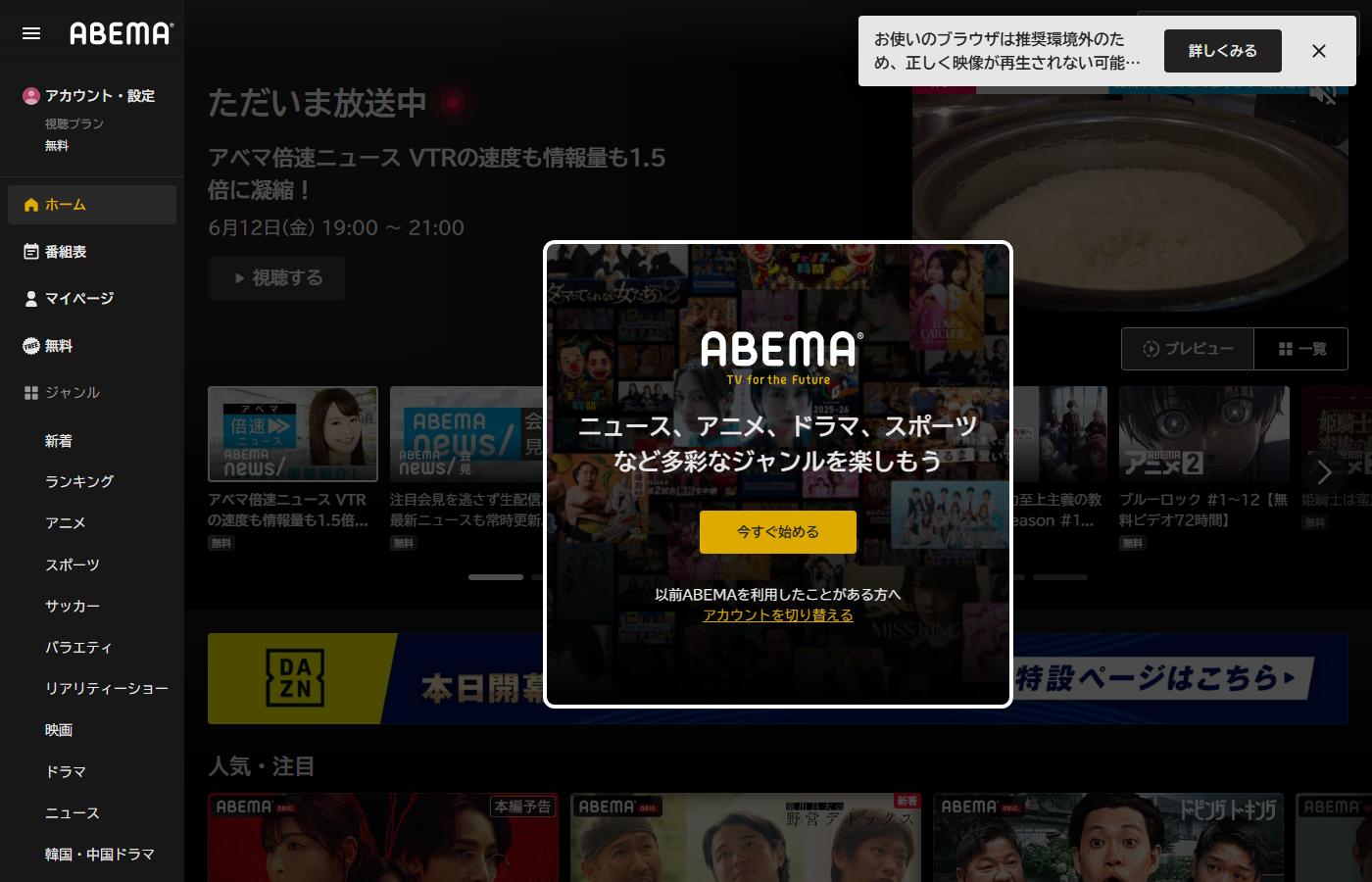 ABEMA’s homepage (June 2026). Source: abema.tv
Unlike most services here, ABEMA officially works in most countries — much of it plays abroad with no VPN at all (though some titles and regions are blocked). → Full guide: Can You Watch ABEMA Outside Japan?
NHK ONE and NHK World — Two Different Things
- NHK World is NHK’s international service: English-language, free, and not geo-blocked. News, documentaries, travel shows. You can watch it right now, no tricks needed.
- NHK ONE is the domestic streaming service — the morning dramas (asadora), the big-budget Taiga historical dramas, the real NHK. It’s geo-blocked and tied to Japan’s NHK reception contract, so most overseas viewers can’t use it even with a VPN — see our honest NHK ONE guide.
A detail most overseas guides haven’t caught up with: the old domestic service “NHK+” (NHK Plus) shut down in September 2025 and was replaced by NHK ONE. If a guide still tells you how to watch “NHK Plus,” it’s outdated — we checked the migration notice on NHK’s own site from here in Japan.
The asadora and Taiga dramas are some of the best television Japan makes, which is why NHK ONE matters.
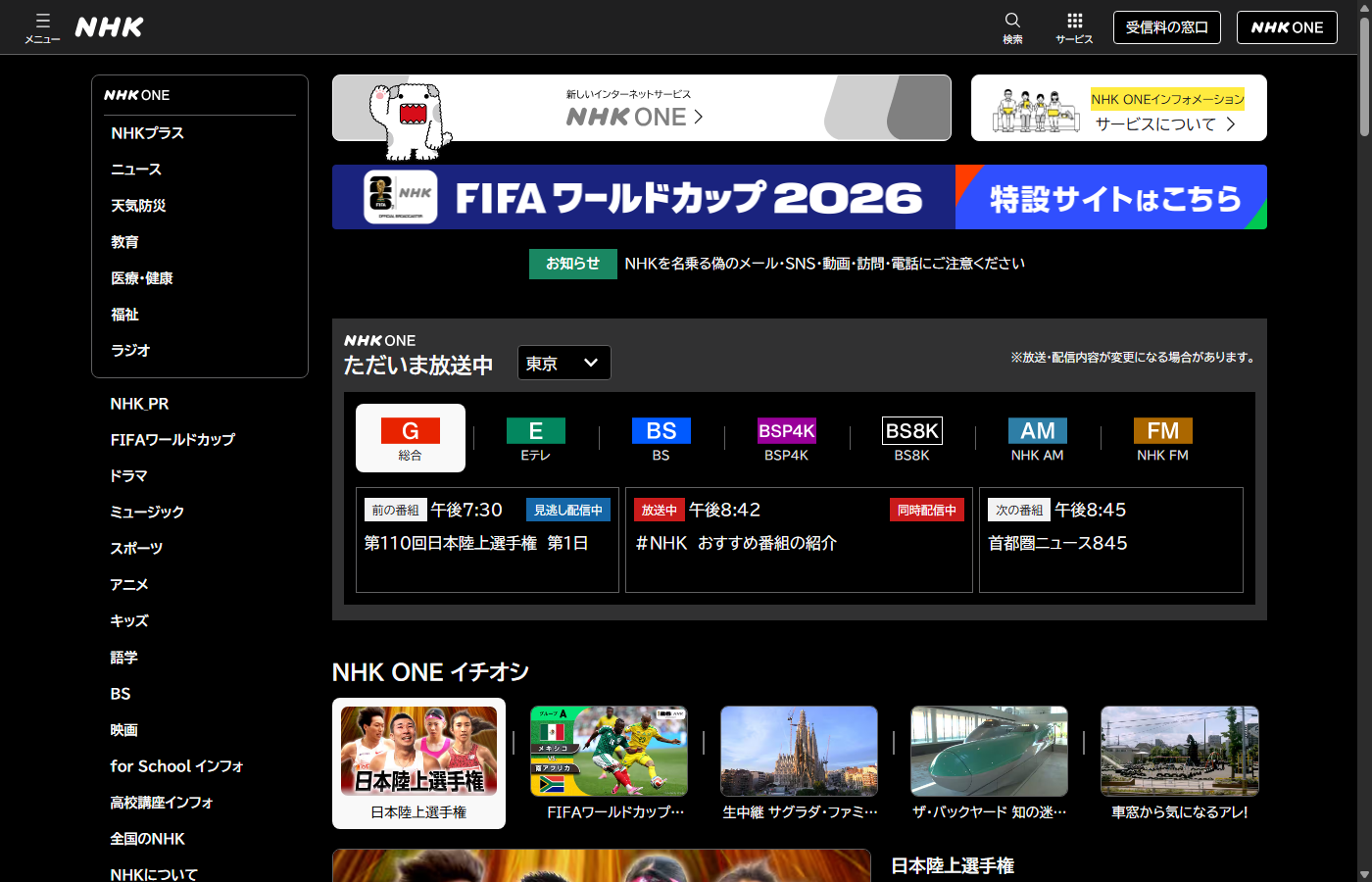 NHK ONE on nhk.jp, captured from Japan (June 2026). Source: nhk.jp
U-NEXT — The Biggest Library You’ve Never Heard Of
U-NEXT is Japan’s answer to “what if Netflix, a bookstore, and a magazine stand merged” — 320,000+ videos plus manga and magazines, around ¥2,189/month. It routinely has anime, Japanese films, and Asian dramas that no international service licenses.
In Japan it’s the premium choice; overseas it’s invisible. If you’ve ever hunted for a Japanese film that exists on “no streaming service,” it probably exists on U-NEXT.
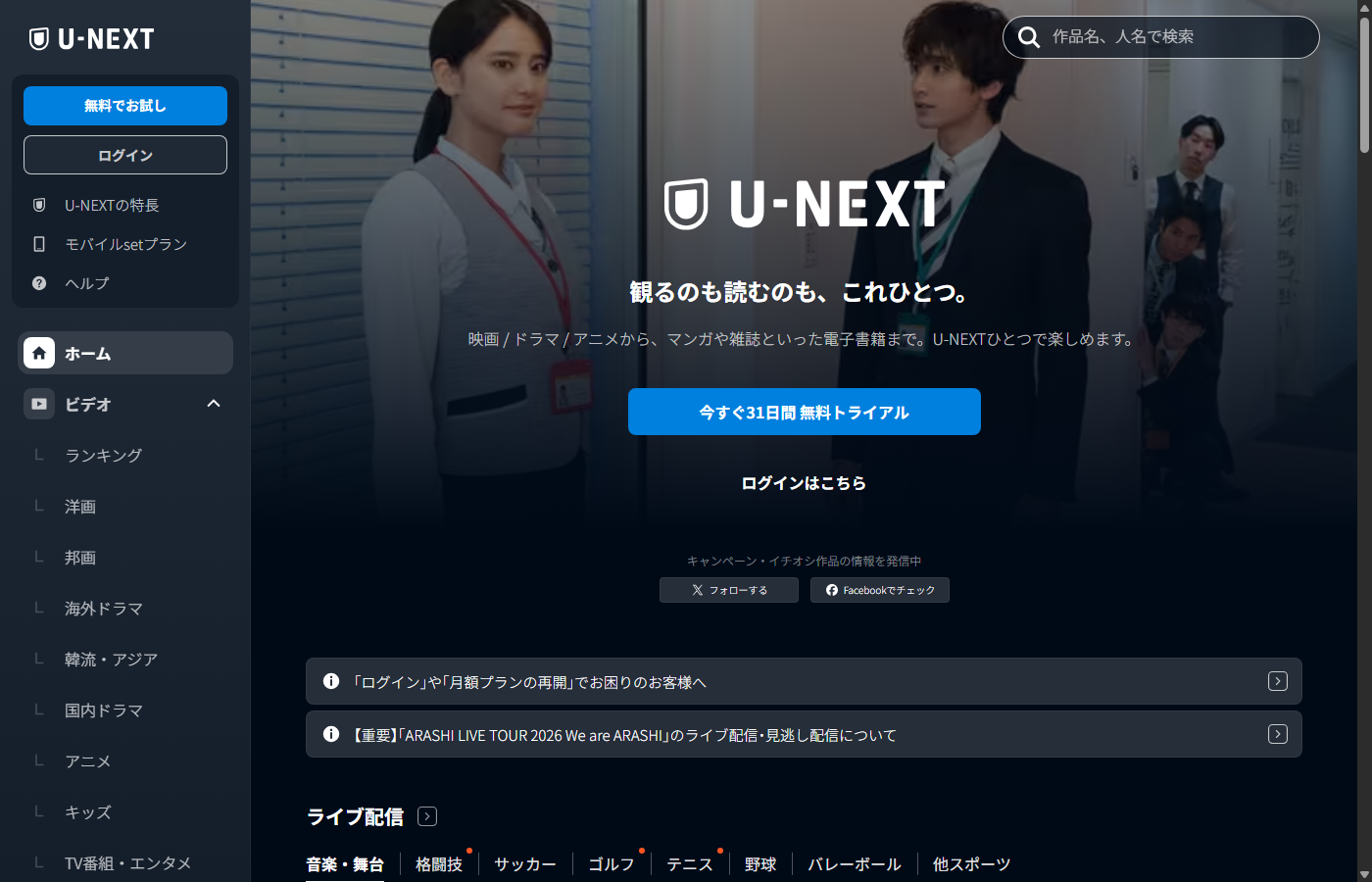 U-NEXT’s landing page (June 2026). Source: video.unext.jp
FOD, Lemino, DMM TV — The Specialists
- FOD: Fuji TV’s service — the back-catalog of one of Japan’s biggest networks, including dramas never released elsewhere
- Lemino: docomo’s platform, strong on music events and Korean content
- DMM TV: aggressive anime lineup at a low price point
You’d subscribe to these for specific shows — which is exactly what superfans abroad end up doing.
niconico — The Culture Engine
Before YouTube comments, there was niconico: comments fly across the video itself, creating a shared-viewing culture that shaped the modern internet. Vocaloid, “utaite” singers, game streaming, MAD videos — entire genres of Japanese internet culture started here and still live here.
It’s slower and clunkier than YouTube, and it’s a living museum of why Japanese internet culture looks the way it does. Free tier available; some features geo-restricted.
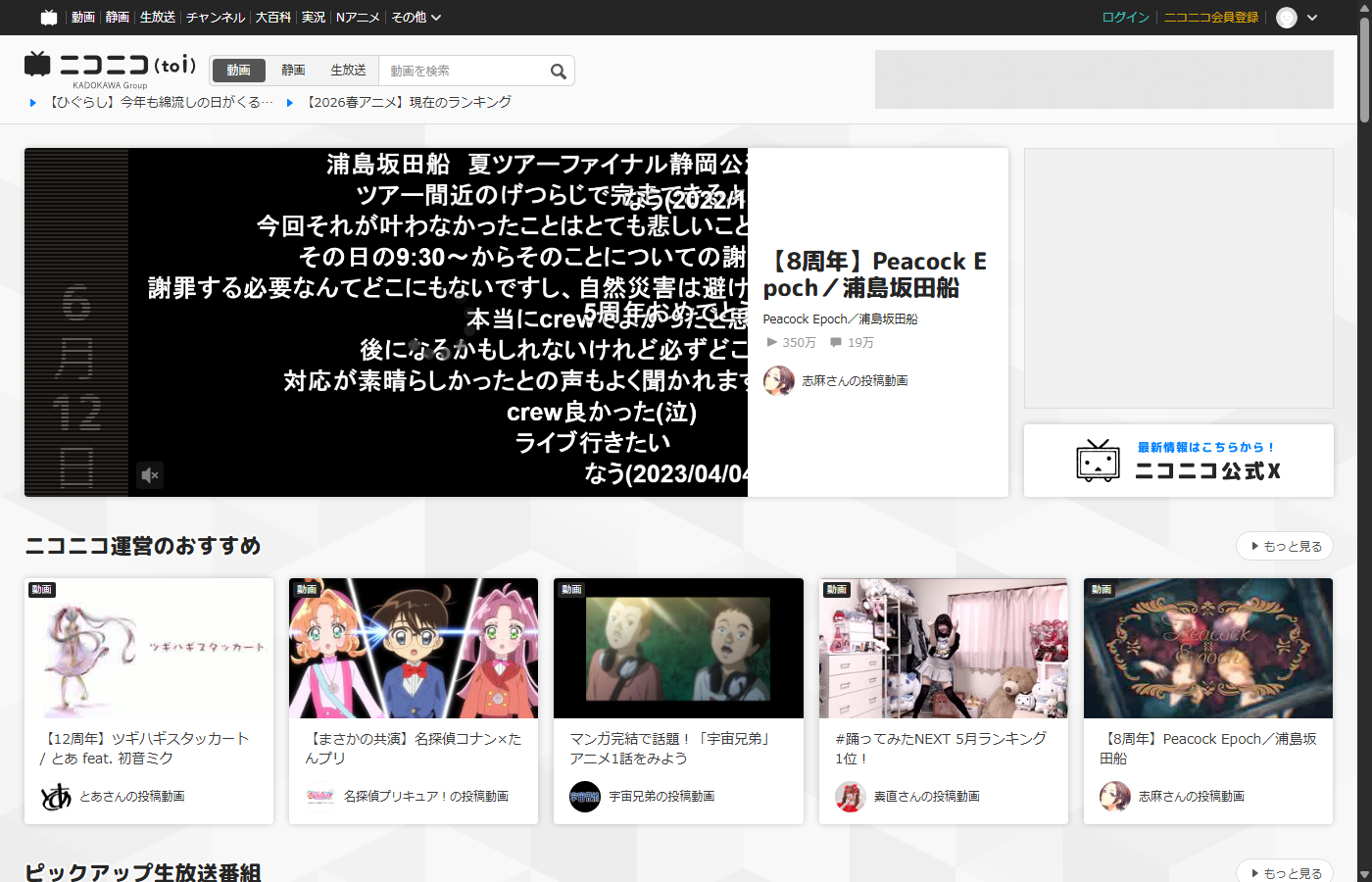 niconico’s homepage with its signature comment overlay visible (June 2026). Source: nicovideo.jp
radiko — The Bonus Round
Not video, but worth knowing: radiko streams essentially every radio station in Japan, live and free. Seiyuu (voice actor) radio shows, music programs, late-night comedy — radio is still a huge medium in Japan, and radiko is the whole country’s dial in one app. Geo-blocked, naturally.
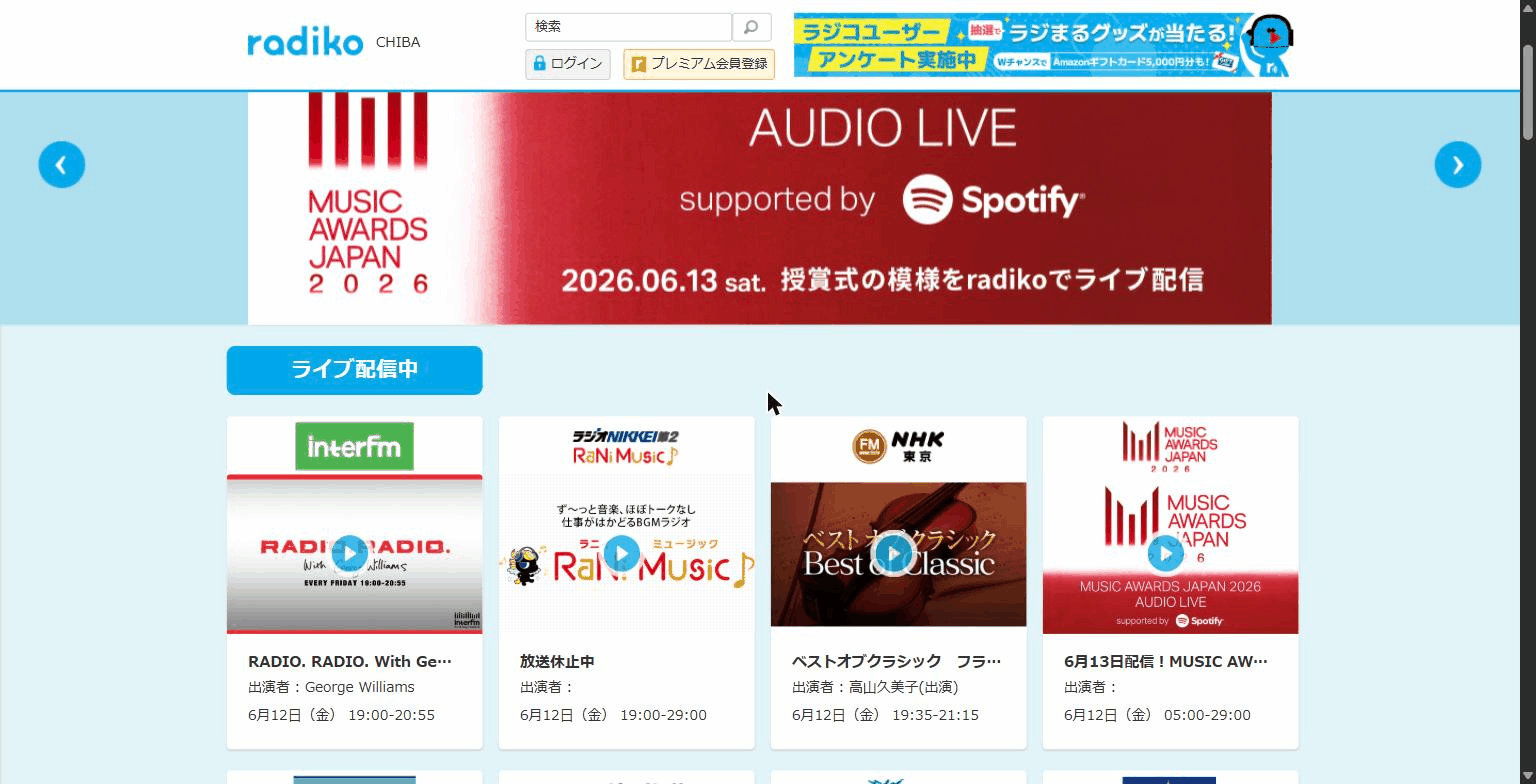 radiko’s homepage. The “CHIBA” indicator at the top is its location detection — radiko even geo-targets by prefecture within Japan. Captured from Chiba (June 2026). Source: radiko.jp
So How Do You Actually Watch These from Abroad?
Every Japan-only service above does the same check: does your IP address come from Japan? A VPN with Japanese servers answers that question the way you want it answered.
The short version of what matters:
- Japanese servers that actually work with TVer (note: ABEMA already runs in most countries, so try it without a VPN first)
- Speed — HD streams need consistent bandwidth
- Reliability across services — you want one VPN that handles all of the above
The VPN I’ve actually used for this, for six years: NordVPN review.
Note: use of VPNs is subject to each service’s terms of use. This guide is informational.
FAQ
Are these services legal to watch? The services themselves are 100% legal and official — that’s the point. They’re just region-locked, like Netflix libraries are.
Which services are completely free? TVer and ABEMA’s main tier cost nothing. NHK World is free and not even geo-blocked. That’s a lot of legitimate Japanese TV for $0.
Do any of them have English subtitles? Mostly no — these are domestic services for Japanese audiences. NHK World is the exception. For learners, that’s the feature, not the bug: this is the real immersion material.
What’s the best service for anime specifically? ABEMA for simulcasts and free viewing, U-NEXT or DMM TV for deep catalogs. We’ll cover anime-specific strategies in a dedicated guide.
This post contains affiliate links — see our disclosure. Written from Chiba, Japan, where all of these services are one tap away — checked June 2026.