If you’ve only ever grabbed Hi-Chew from an American checkout lane, here’s something fun: the one sold in Japan isn’t quite the same lineup. I’ve been eating Hi-Chew since I was a kid here in Chiba — it’s the candy that shows up in every convenience store, every supermarket, and every kid’s pocket. So here’s an honest ranking of the flavors, from Japan, plus what makes this chewy little rectangle such a big deal in the first place.
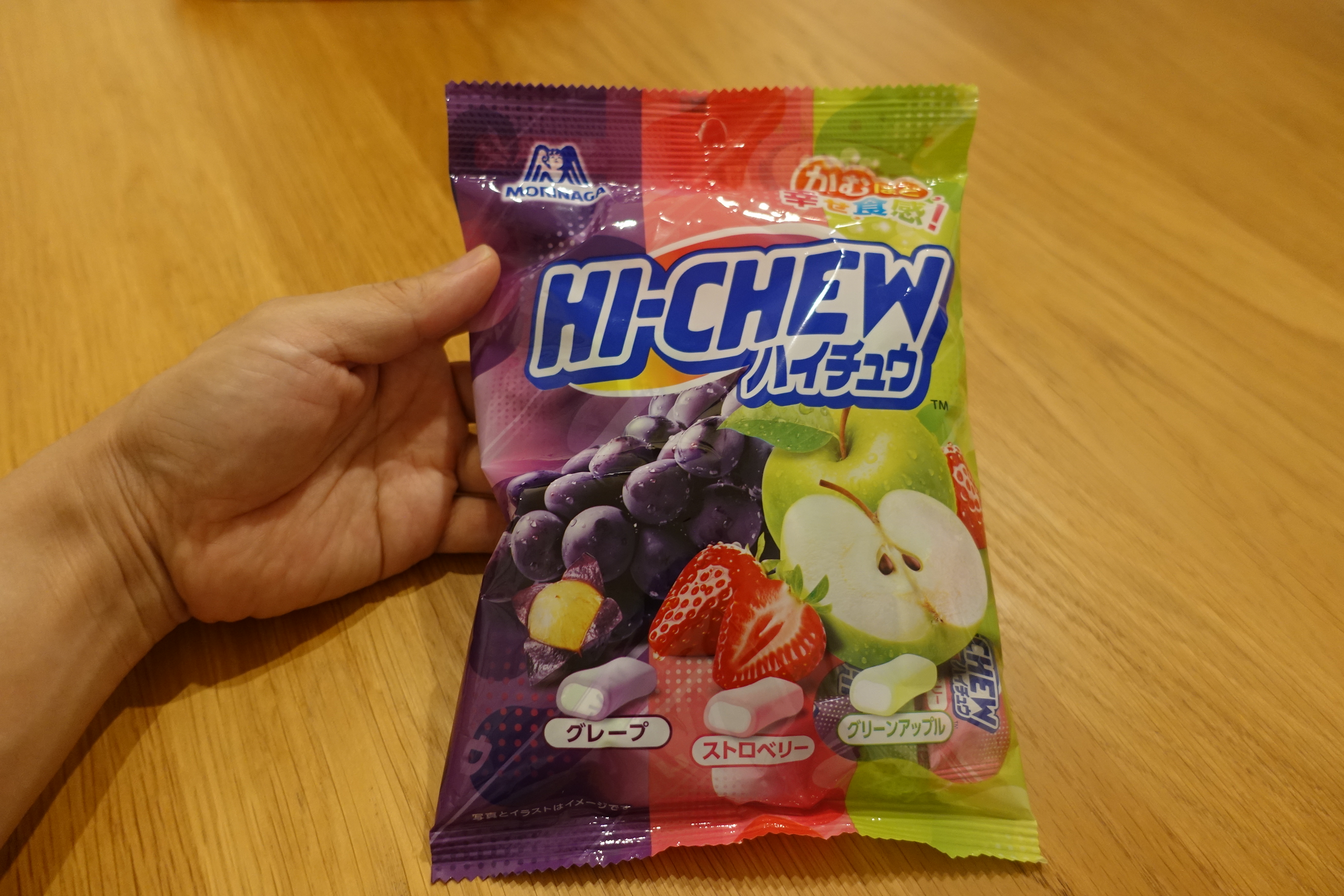 Hi-Chew grape, strawberry and green apple, bought in Japan.
The Quick Answer
Of the standard lineup, grape is the one to try first — it’s also the flavor Americans are suddenly searching for. But if you can find a seasonal tropical pack (passion fruit, dragon fruit, guava), that’s the one I’d personally reach for again. More on why below.
What Is Hi-Chew, Exactly?
Hi-Chew (ハイチュウ) is a chewy fruit candy made by Morinaga, one of Japan’s oldest confectionery companies. It launched in 1975, and the core idea was very Japanese: a candy with the satisfying chew of gum that you can politely swallow instead of spitting out.
The texture is the whole point. It starts firm, softens as you chew, and has a double-layer structure — a white chewy center wrapped in a fruit-flavored outer layer. It’s often described as somewhere between taffy and gum, but it doesn’t stick to your teeth the way taffy does.
For reference, here’s what it actually costs in Japan: the standard multi-flavor bag (grape, strawberry, green apple) runs about ¥218 (tax included, roughly $1.35), and a single tropical-series stick pack is about ¥130 (tax included, roughly $0.80) — this is convenience-store candy, priced like it.
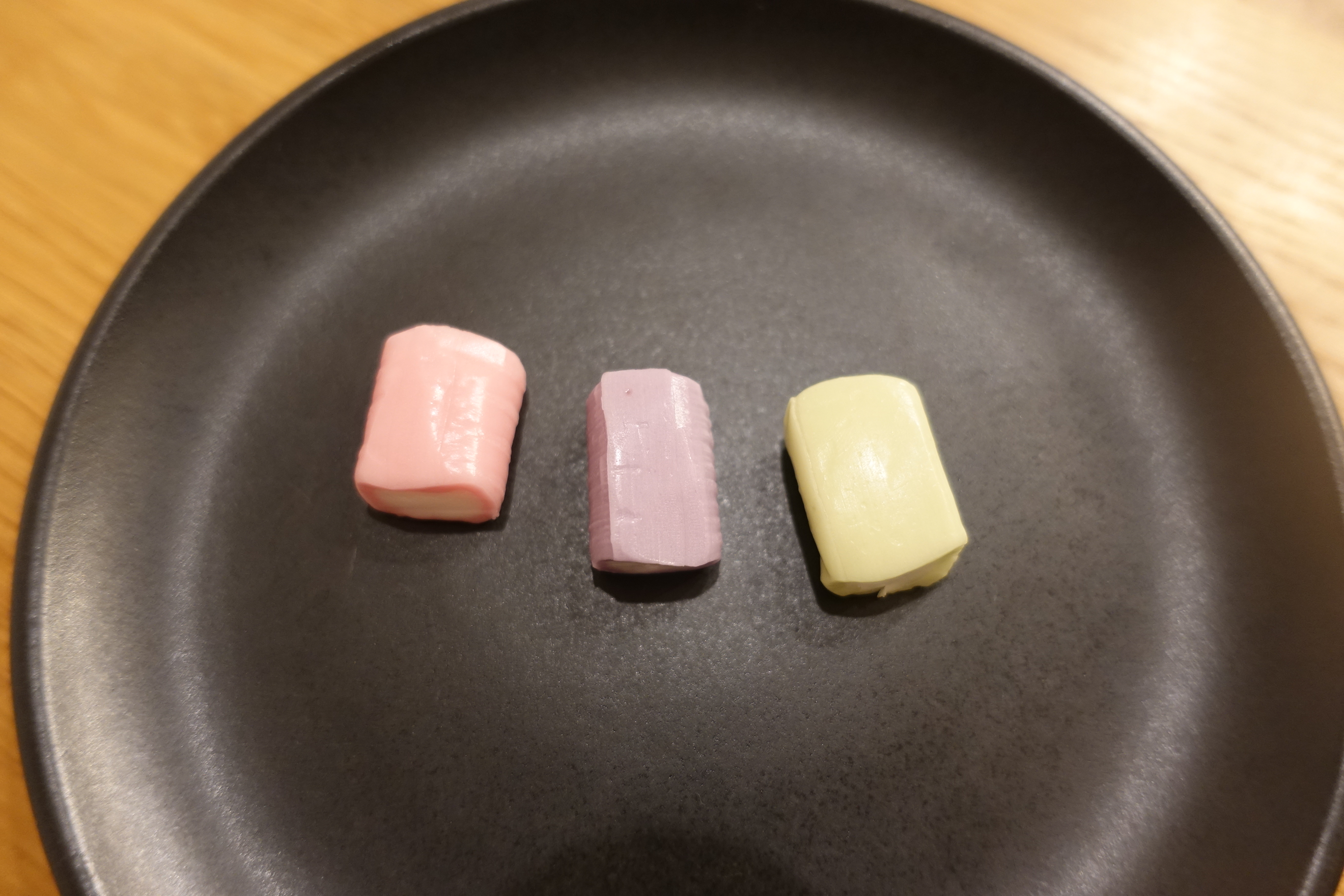 Cut in half: strawberry, grape and green apple, showing the chewy white center inside each fruit-flavored layer.
The Flavor Ranking (from Japan)
All four of these were genuinely good — nothing here was a miss. But here’s how I’d rank them.
1. Grape (グレープ)
The most reliably good of the standard three. It’s a familiar, straightforward grape flavor — nothing experimental, just done well. This is the one I’d hand a first-timer.
One outside fact worth knowing: US search interest in Hi-Chew grape has exploded this past year — it’s the flavor everyone abroad suddenly wants to talk about.
2. Green Apple (グリーンアップル)
Bright and refreshing — cleaner and lighter than the other two by comparison. If grape and strawberry feel a bit heavy after a few pieces, green apple is the palate-cleanser of the lineup.
3. Strawberry (ストロベリー)
Here’s the one that actually surprised me, as someone who grows real strawberries for a living: it doesn’t taste much like strawberry at all. It reads more floral — I couldn’t tell you which flower, just that it leans toward flower-scent territory rather than fruit. That’s not a complaint; it’s genuinely tasty on its own terms. Just don’t go in expecting it to taste like the strawberries you’d eat off the vine.
Bonus: Tropical Series — Passion Fruit, Dragon Fruit & Guava (つぶつぶ×3つの味)
This is a seasonal/regional pack, not one of the global standards, but it’s worth calling out on its own: this is my personal favorite of everything I tried. Passion fruit is the dominant flavor, the aroma is genuinely good, and Morinaga even reproduced the little seed-like texture you get biting into real passion fruit or dragon fruit — it’s a surprisingly convincing stand-in for the actual fruit. If you see this “tsubu-tsubu” (つぶつぶ, “grainy/seedy”) pack on a shelf in Japan, it’s worth grabbing over the standard flavors.
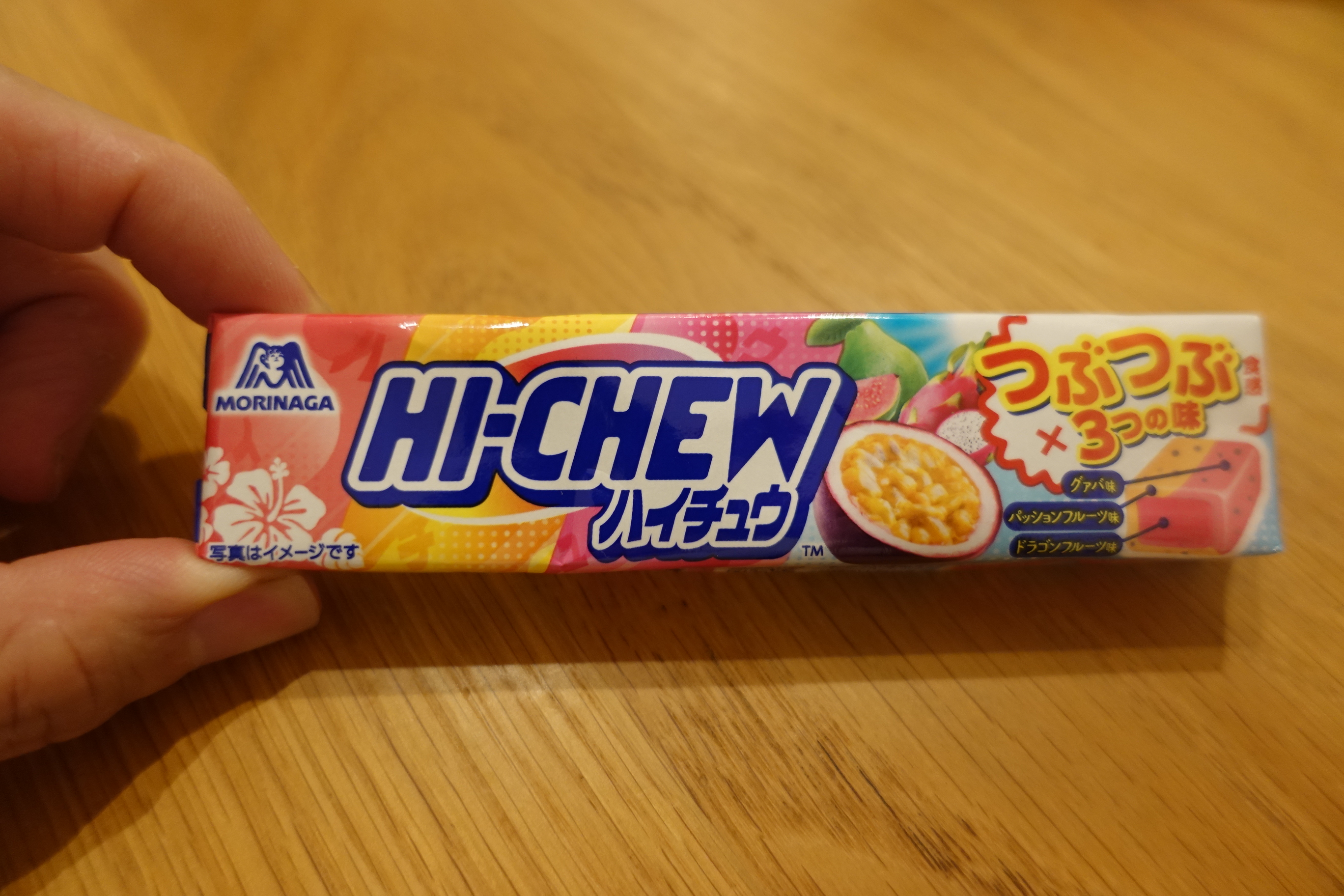 The seasonal tropical series: passion fruit, dragon fruit and guava.
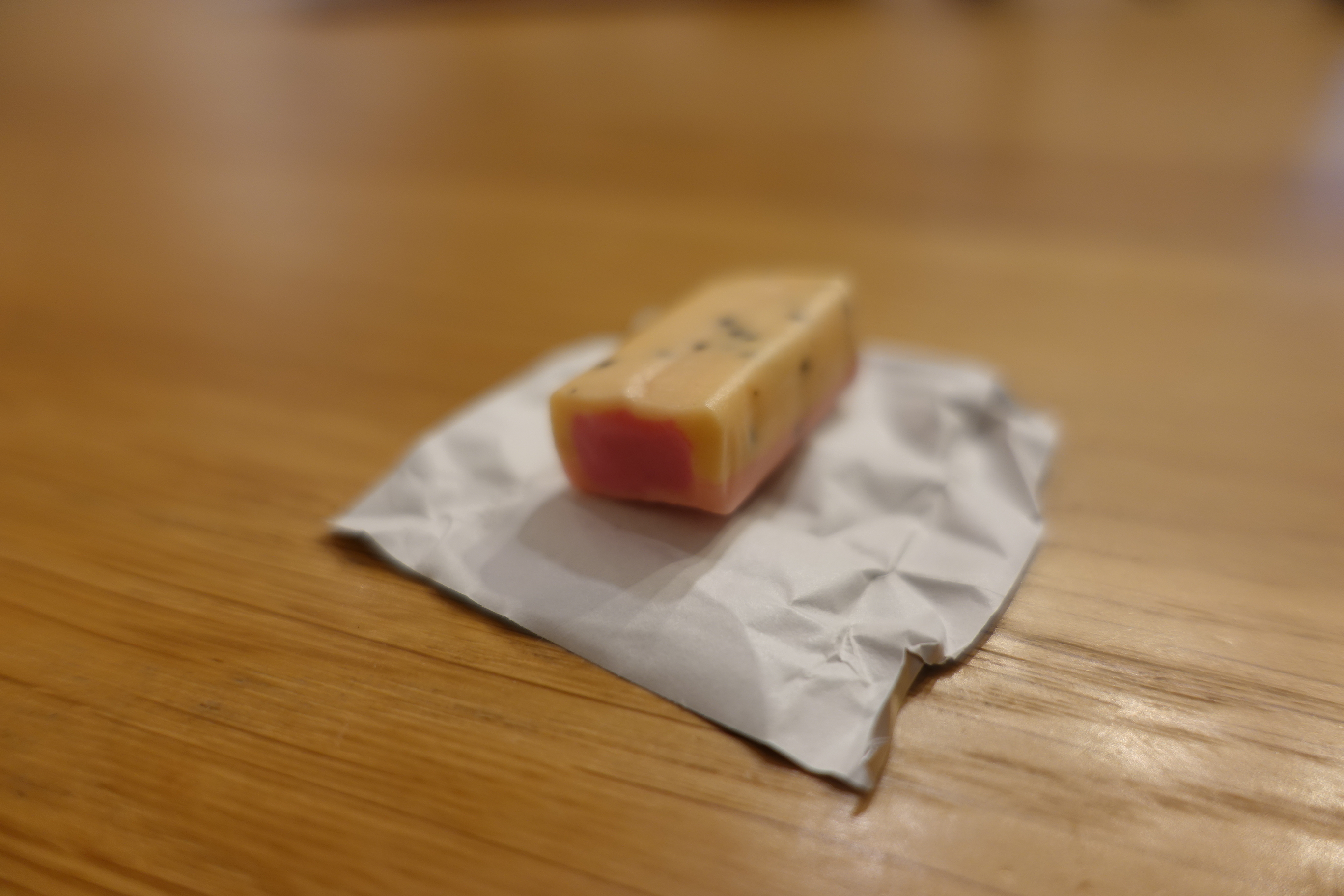 The passion fruit piece — Morinaga reproduces the fruit’s actual seed texture inside the chew.
Japan vs. the US: Not the Same Hi-Chew
This surprises people. Hi-Chew’s base trio — strawberry, grape, green apple — is global. But the US lineup has its own additions that were created for the American market, like mango and black cherry. Mango in particular was developed specifically for US shoppers, which is why you won’t reliably find it on a Japanese shelf.
So if you’re comparing notes with a friend in Japan, you may literally be eating different candies. Neither is “fake” — Morinaga just builds the lineup per country.
And the US bet is working: Hi-Chew’s American sales grew from about $8 million in 2012 to over $100 million by 2021. It went from “weird import candy” to checkout-lane standard in a decade.
Where to Get the Japanese Flavors
If you’re outside Japan and want the Japan-side experience rather than the US lineup:
- Japanese snack subscription boxes sometimes include Hi-Chew or similar Morinaga chews as part of a monthly mix — see our snack box ranking for how those work
- Asian grocery stores often stock both US and imported Japanese versions — check the back of the package for the importer label
- Custom-pick stores like the one in our Kokoro Japan review let you choose exact items yourself
Thinking of putting together a care package instead of hunting down one bag? Our Japanese snack gift guide covers how to pick a box for the person you’re shopping for.
FAQ
What is Hi-Chew made of? It’s a chewy candy by Morinaga based on sugar, glucose syrup and fruit juices, with that signature two-layer chew. Exact ingredients vary by flavor and country — check your package if you have allergies.
Is Hi-Chew gum? No — you swallow it. That was the founding idea: a gum-like chew you don’t have to spit out.
What’s the most popular Hi-Chew flavor? Globally, the core trio is strawberry, grape and green apple. In the US, mango — a US-specific flavor — has a devoted following, and grape has been surging lately. Japan also rotates in seasonal packs, like a tropical passion fruit / dragon fruit / guava series, that aren’t part of the standard lineup.
Is Japanese Hi-Chew different from American Hi-Chew? Yes, the lineups differ. The US version includes flavors created for that market (mango, black cherry); Japan rotates its own seasonal and regional flavors that never leave the country.
Written from a strawberry farm in Chiba, Japan. No one paid us to rank candy — flavor opinions are our own. Facts about Morinaga and US sales checked July 2026. Yen prices and USD conversion (¥1 ≈ $0.0061) are current as of July 2026 and will drift with the exchange rate — check current pricing before you buy.