Most wrapped candy comes with an obvious rule: unwrap it first. Botan Ame breaks that rule on purpose — the thin film around each piece is edible rice paper, and you’re meant to eat the whole thing without peeling anything off. It’s a small detail, but it’s the first thing that tells you this isn’t an ordinary citrus candy.
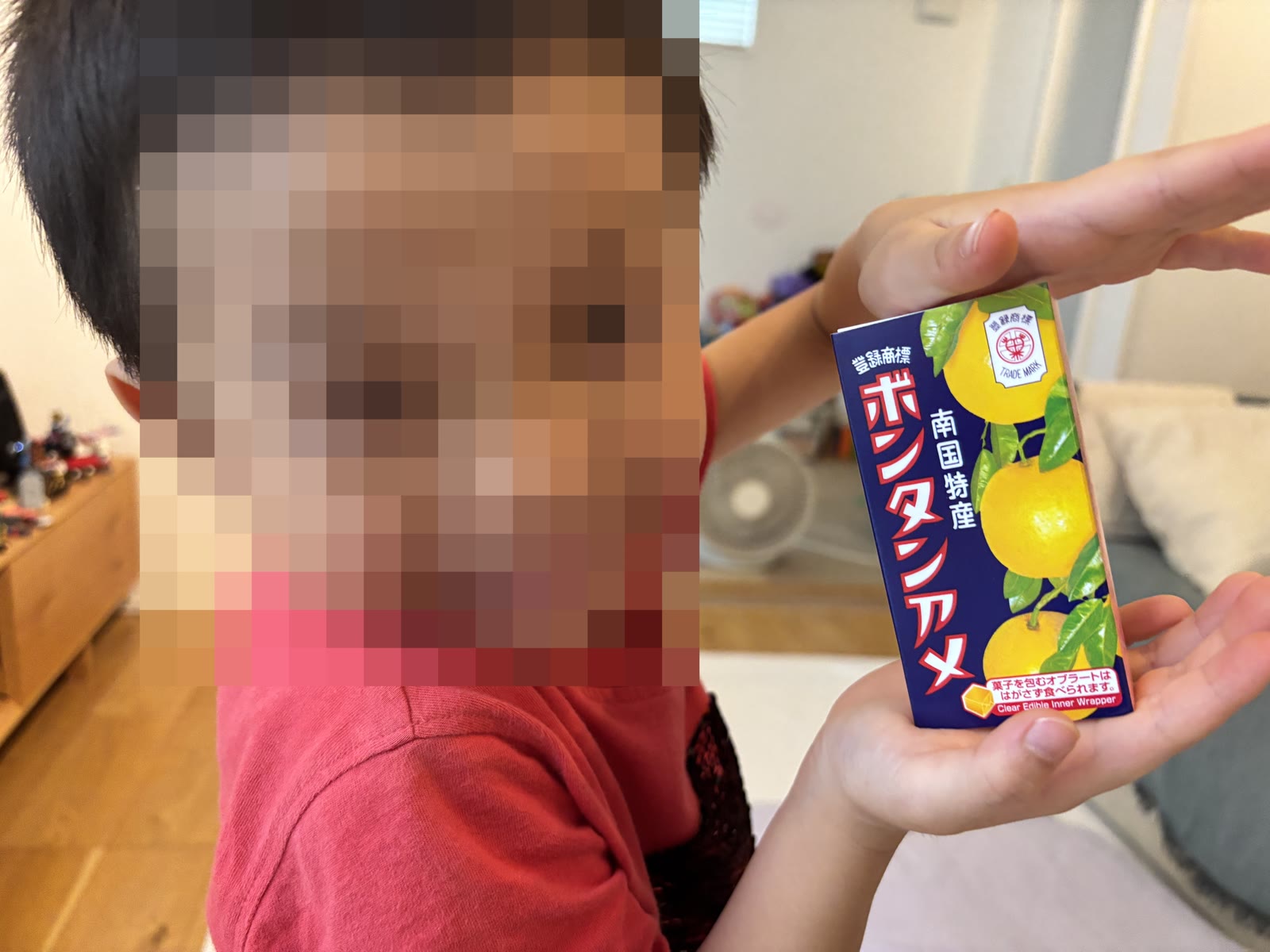 Botan Ame — a citrus candy from Kagoshima, in its classic navy-and-yellow box.
The Quick Answer
Botan Ame is a soft, chewy candy built around bontan — a large Kagoshima citrus fruit — with a genuinely fresh, citrusy smell and a lingering fruity aftertaste. It’s noticeably softer and less sticky-chewy than Hi-Chew, with sweetness that stays restrained rather than sugary. It’s less a “treat” candy and more a palate-refresher — the kind of thing that clears your mouth out and leaves it feeling clean.
What Is Botan Ame, Exactly?
Botan Ame (文旦飴, sometimes written ボンタンアメ) is made by Seika Foods (セイカ食品), a confectionery company based in Kagoshima City. The name comes from bontan, a large citrus grown in southern Japan — the box artwork shows the fruit hanging on the branch, and the flavor is built around its juice.
 The English side panel: “BONTAN AME.”
The ingredient list confirms what the wrapper claims: water-based starch syrup, sugar, malt syrup, glutinous rice, an edible rice-paper wrapper (oblate), bontan juice, concentrated mandarin orange juice, starch, flavoring, annatto coloring, and soy-derived emulsifier. A standard box holds 14 pieces (about 63g), at roughly 215 kcal for the whole box.
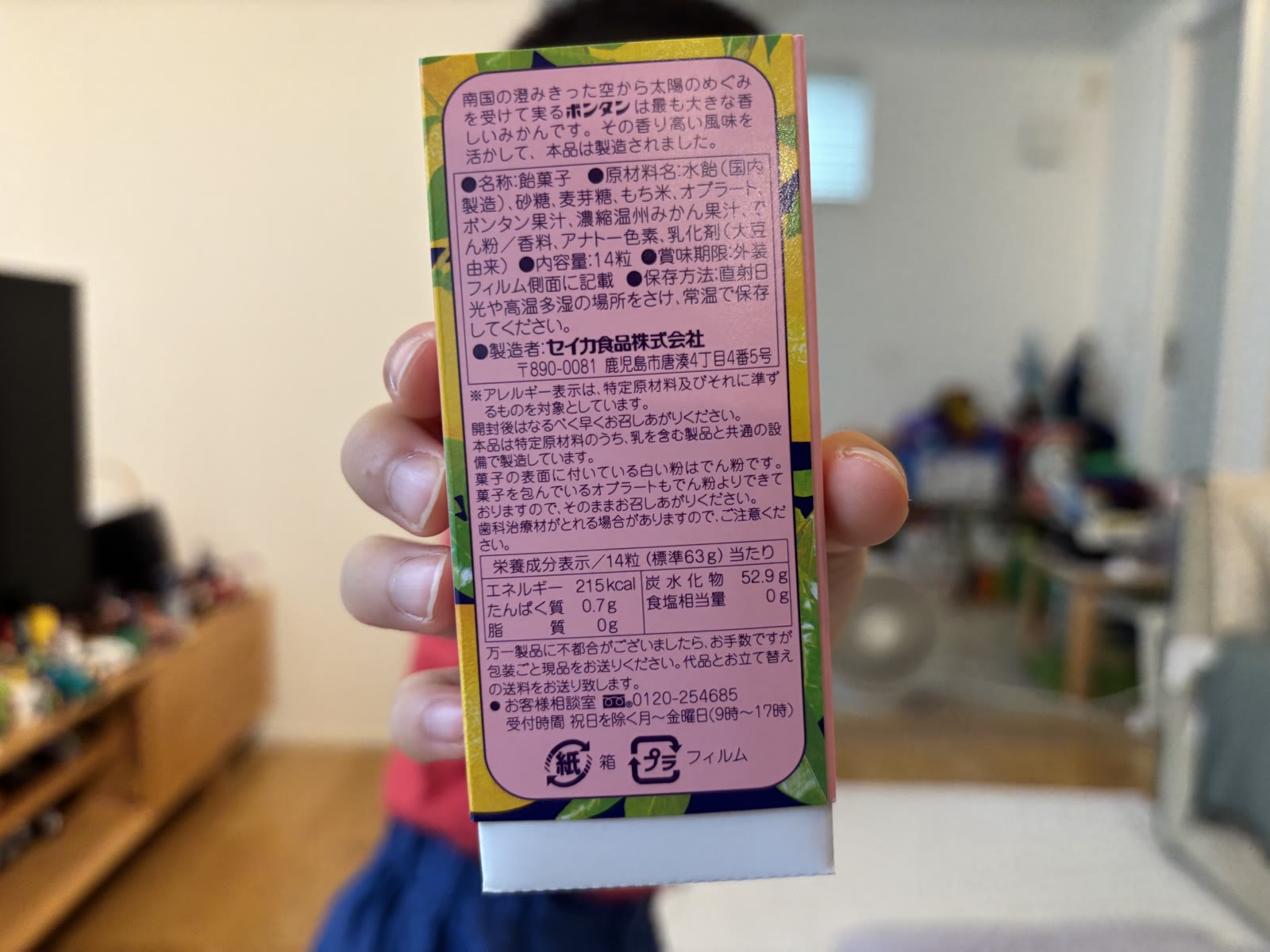 Ingredients and nutrition facts, printed on the back panel — no allergen call-outs beyond the standard mandatory list.
The Edible Wrapper (Read This Before You Eat It)
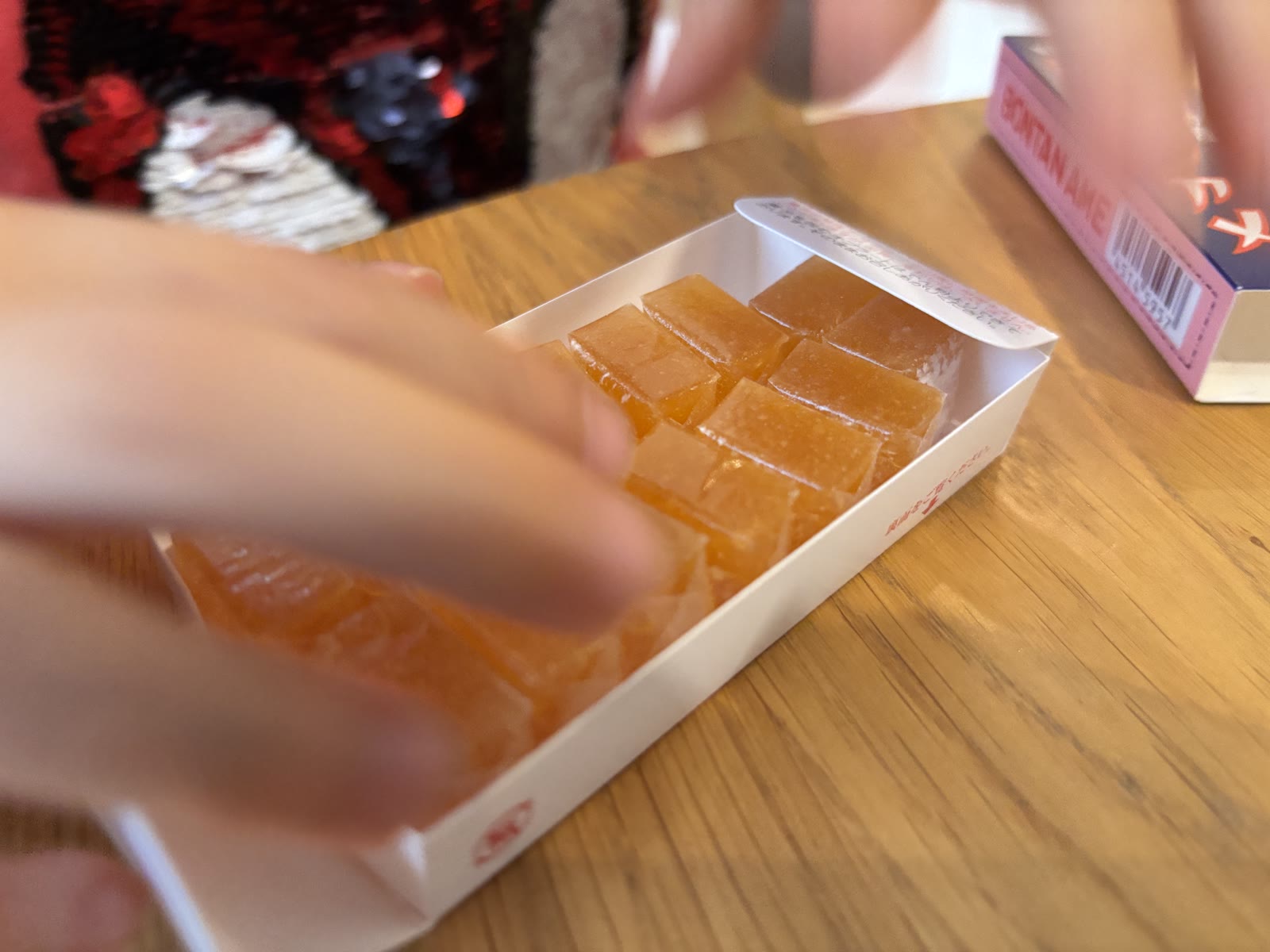 Individually wrapped cubes inside the box.
This is the detail every first-timer needs to know: the thin, slightly powdery-looking film wrapped around each piece is oblate — an edible starch film, the same category of wrapper used on some medicines in Japan. You’re supposed to eat it along with the candy, not peel it off. The box even prints a reminder about this directly on the packaging. The white dusting you see on the candy itself is also just starch, used so the pieces don’t stick together — also fine to eat.
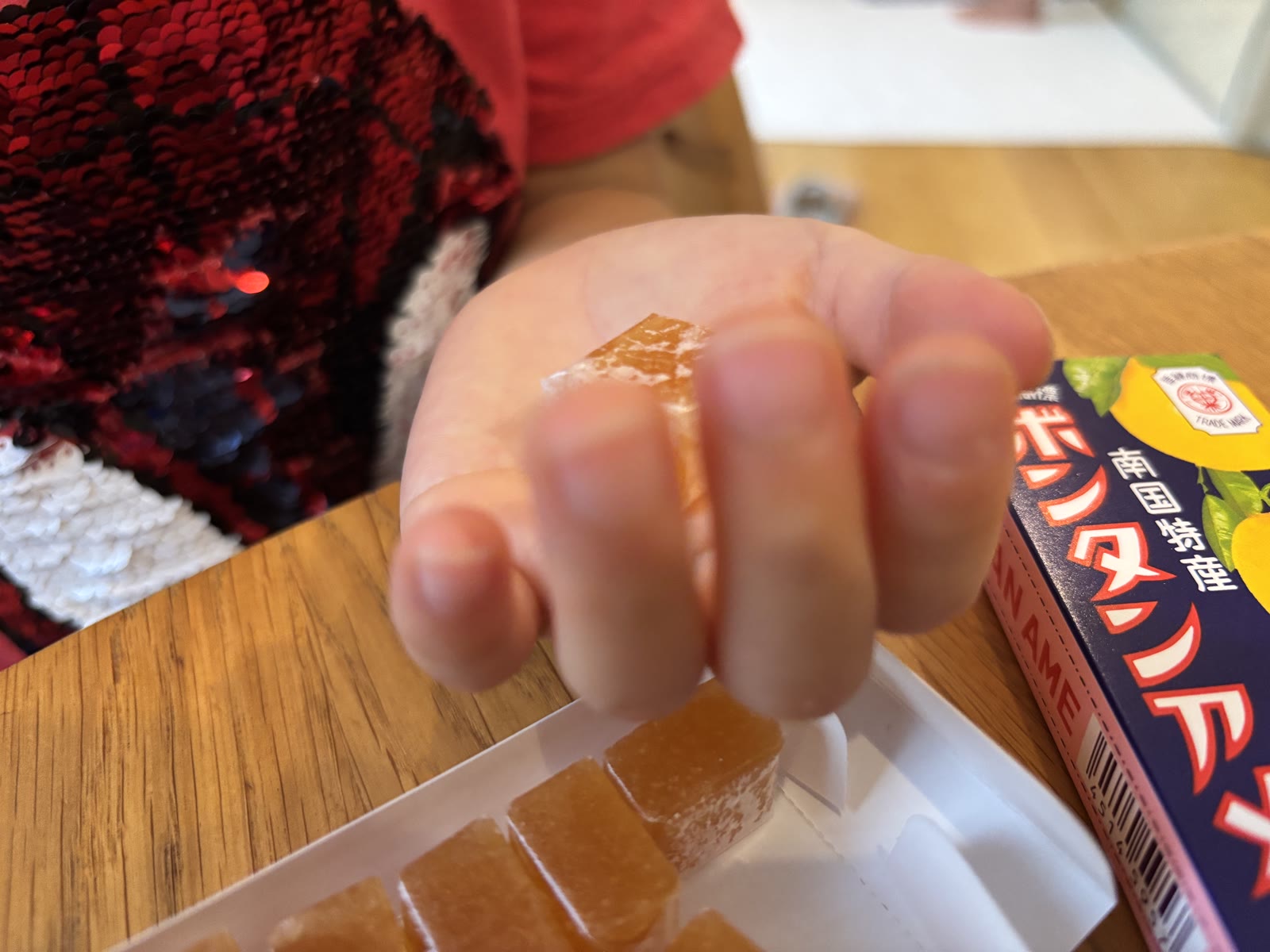 One piece, wrapper and all — this is how it’s meant to be eaten.
The Taste Test
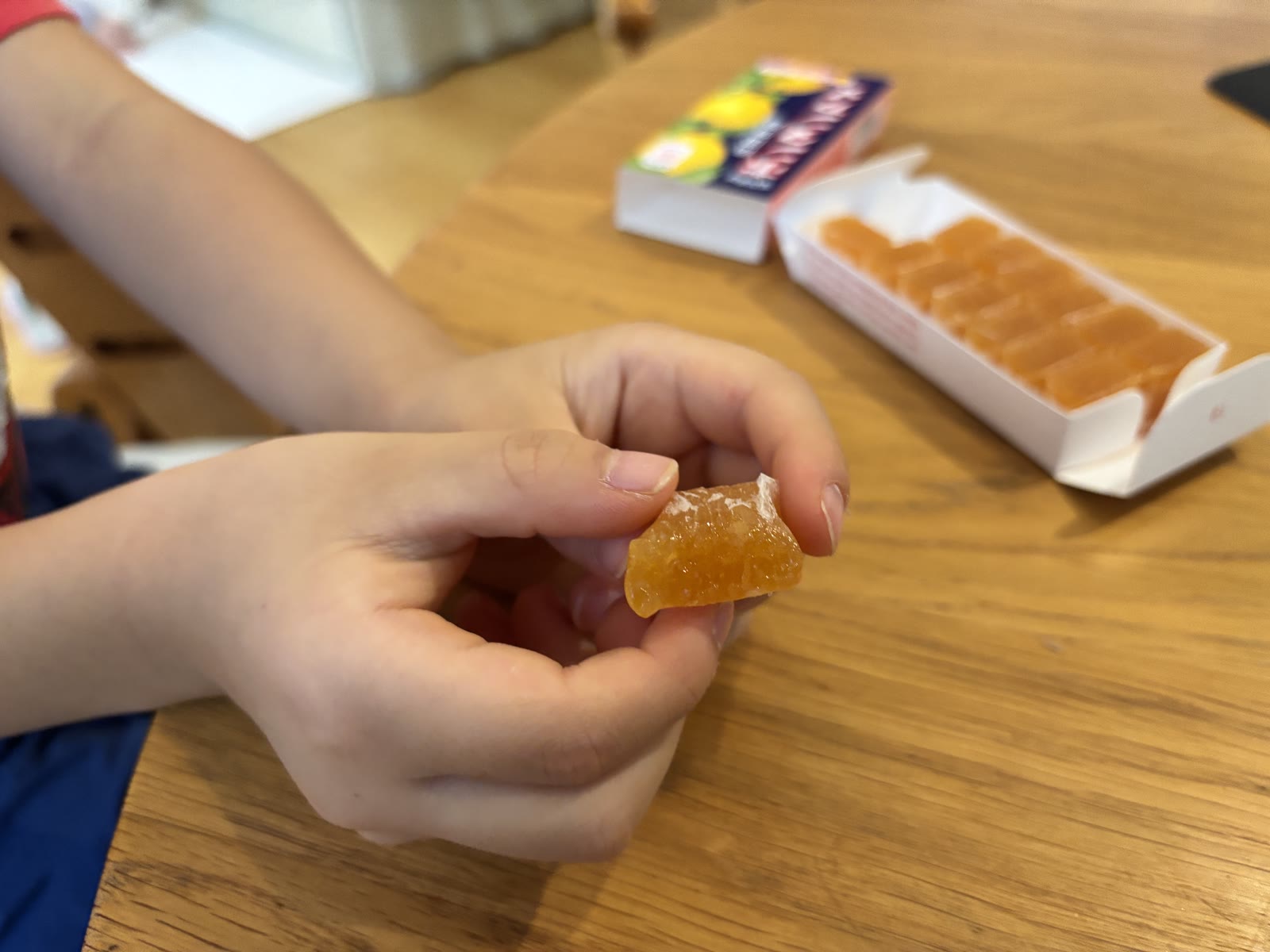 Unwrapping — the film thins out and becomes part of the candy itself as you eat it.
The first thing that stands out is the smell: a genuinely refreshing citrus aroma, closer to real bontan or yuzu than an artificial “citrus candy” scent. Texturally, it’s soft — noticeably softer and less chewy than Hi-Chew, with much less pull to it. It’s built more like a firm, dense jelly than a taffy.
The sweetness comes through as a simple, honest starch-syrup sweetness rather than anything sharp or artificial, and importantly, it stays restrained rather than cloying. What lingers afterward is the best part: a clean, citrusy aftertaste that stays in your mouth well after the candy is gone — closer to what you’d want from a mid-afternoon refresher than a sugar hit.
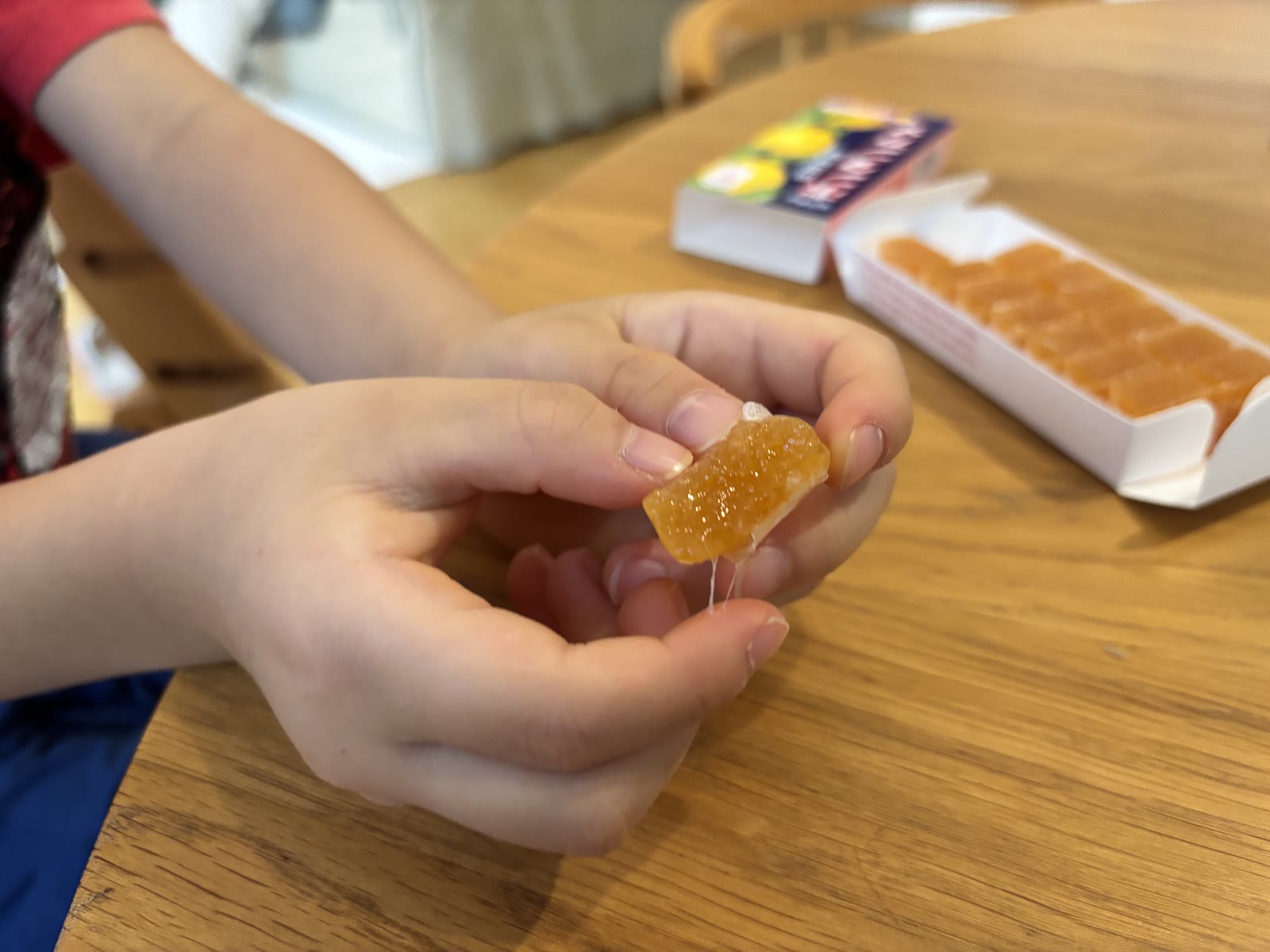 The texture up close — dense and soft rather than sticky.
Overall verdict: this isn’t a candy built to be exciting. It’s built to be clean and refreshing, and on that specific job, it delivers well.
Where to Get It
Botan Ame is a long-running candy with a consistent nationwide recipe, and it’s carried by supermarkets across Japan — not just in the south. That said, it’s still identity-wise a Kyushu/Kagoshima specialty rather than a default candy-aisle item, so convenience stores and smaller supermarkets don’t reliably stock it; a proper supermarket is the safer bet wherever you are in Japan. If you’re outside Japan:
- Japanese snack subscription boxes occasionally rotate in regional citrus candies like this one — see our snack box ranking
- Asian grocery stores and Japanese snack importers are the more reliable route for a specific regional item like this
- Custom-pick stores like the one in our Kokoro Japan review let you search for it by name instead of hoping it turns up in a mystery box
If you’re building a gift box around specific flavors rather than a single item, our Japanese snack gift guide covers how to put one together.
More Photos
We took a lot of photos while we were at it — click any of these to see the full size.
FAQ
Do you really eat the wrapper on Botan Ame? Yes — the film around each piece is edible rice-paper (oblate), the same category of edible wrapper used on some medicine. It’s meant to be eaten with the candy, not peeled off.
What does Botan Ame taste like? A soft, citrusy candy built around bontan (a Kagoshima citrus) and mandarin orange juice — restrained sweetness, a fresh citrus aroma, and a clean aftertaste rather than a heavy sugar hit.
Is Botan Ame the same everywhere in Japan? The recipe is the same nationwide, and it’s actually stocked at supermarkets across the country — this isn’t a “you can only get it in Kagoshima” item. It’s just not guaranteed at convenience stores or smaller supermarkets, since it’s still identity-wise a Kyushu specialty rather than a default candy-aisle staple. A proper supermarket is your best bet regardless of region.
Is Botan Ame similar to Hi-Chew? Only in the broad “chewy fruit candy” category. Texturally it’s softer and less sticky-chewy than Hi-Chew, and the flavor leans savory-refreshing rather than sweet-fruity.
Written from Chiba, Japan. Facts about Seika Foods and Botan Ame’s ingredients checked directly against the product packaging, September 2026.